
SWAMI RAMA HIMALAYAN UNIVERSITY
Swami Ram Nagar, Jolly GrantDehradun - 248016, Uttarakhand, India
Why Are Graduates Struggling to Get Jobs? Understanding the Employability Gap
Admin
September 18, 2026
Career Guide
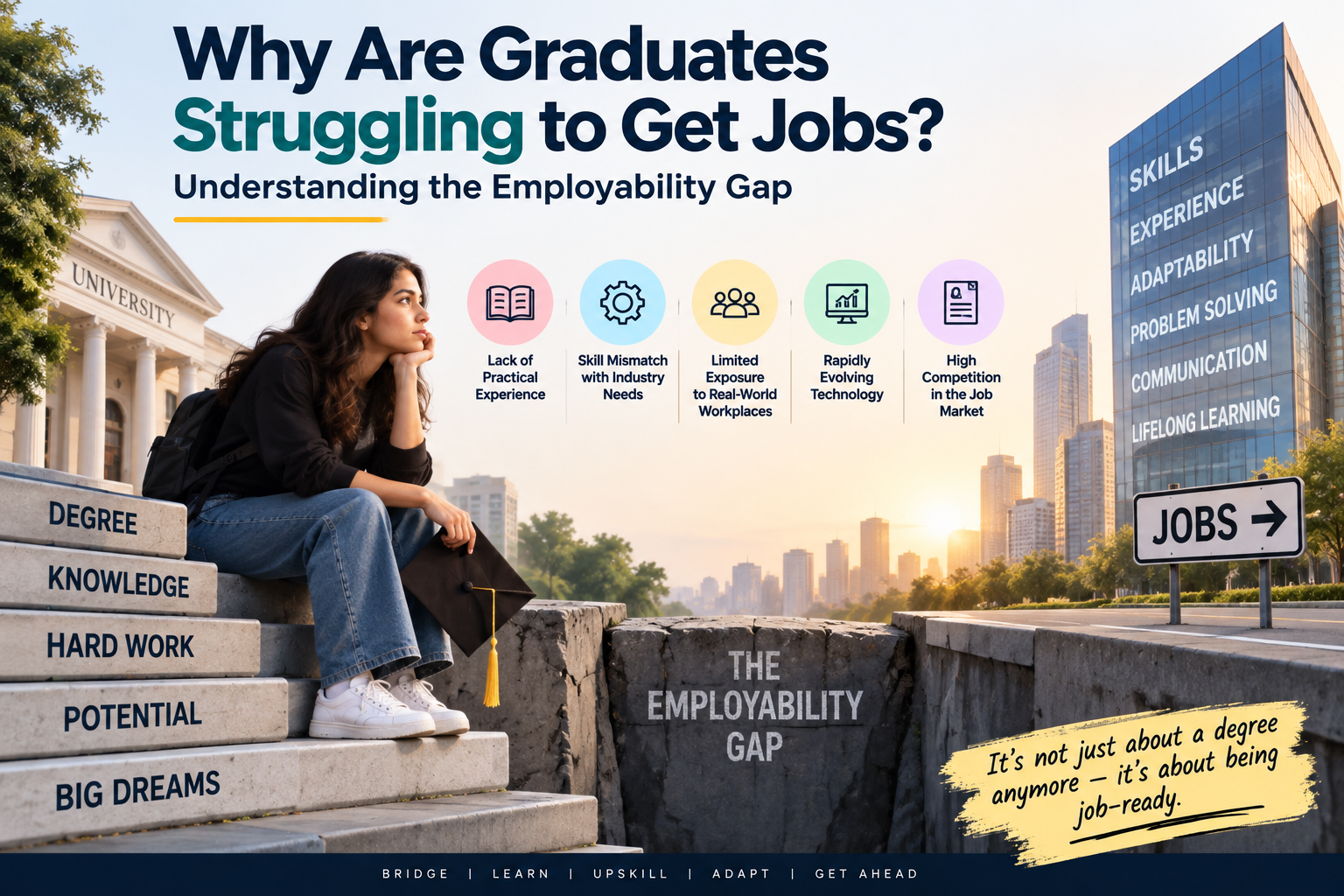
A stack of resumes, a respectable set of grades on each one, and still months of silence after every application. It's one of the more disorienting experiences a young graduate can go through, largely because nobody warned them that academic performance and hireability had quietly become two different things. Understanding why graduates struggle to get jobs today requires looking past effort and grades entirely, toward a gap that most degree programmes were never designed to close on their own.
The graduates who eventually break through this gap rarely do so by working harder at the same things that weren't working before. They do it by recognising, early enough to still act on it, that a degree and a job-ready profile were never quite the same credential to begin with and by spending the time between recognising that and graduation building the second one deliberately, rather than assuming it would appear automatically alongside the first.
Table of Contents
Naming the Actual Problem
What's commonly described in hiring circles as the graduate employability gap isn't really about intelligence or work ethic; it's the distance between what a curriculum teaches and what an employer actually needs on day one, and that distance has widened considerably faster than most institutions have adjusted their coursework.
This is precisely why so many capable students find themselves asking why fresh graduates are unemployed despite strong academic records. The honest answer is rarely a lack of ability, but a mismatch between demonstrated academic knowledge and demonstrated applied capability, which recruiters increasingly test for directly.
It's worth being precise about what this gap actually looks like in practice, since the phrase gets used loosely. It rarely means a graduate cannot perform the work once trained; it means the graduate cannot yet demonstrate, in the space of a thirty-minute interview or a short assessment, that they are capable of it. That distinction matters because it points toward a solvable problem: building demonstrable evidence rather than an unsolvable one about raw ability.
Where the Gap Comes From
Much of this traces back to a persistent skills gap among graduates in areas that rarely appear as standalone subjects on a syllabus: structured communication, comfort with ambiguity, and basic digital fluency, all of which are assumed rather than explicitly taught in most traditional programmes.
Recurring problems faced by fresh graduates tend to compound each other rather than exist independently. Limited real-world exposure feeds into interview anxiety, which feeds into a pattern of rejections that further erodes confidence heading into the next round of applications.
What Employers Say They're Missing
Speaking directly with recruiters across sectors tends to surface a fairly consistent, narrow list of gaps rather than a vague general complaint:
- A visible lack of job readiness skills structured problem-solving, basic project management, and professional communication shows up repeatedly as the first-round filter that eliminates otherwise qualified candidates.
- When asked directly, most hiring managers list the same handful of skills employers want: adaptability, clear communication, collaborative problem-solving, and a demonstrated ability to learn quickly on the job.
- The absence of any applied project work, internship, or demonstrable output beyond coursework consistently ranks as the single most common reason a resume gets filtered out early.
- A surprising number of otherwise strong candidates struggle simply to explain their own academic projects in plain, non-technical language during an interview.
Closing the Gap: What Actually Works
The good news is that this gap is closeable, and closeable earlier than most students realise. Learning how graduates can improve employability usually starts with treating the final two years of a degree as preparation time, not just academic time, deliberately seeking internships, small freelance projects, or volunteer work that produces something concrete to show a recruiter.
Structured career preparation for students mock interviews, resume workshops, and honest feedback sessions well before the actual placement season consistently outperforms last-minute cramming once interview calls finally start coming in.
Where formal coursework falls short, targeted job training programs focused on specific, in-demand technical or professional skills can close a gap far faster than waiting for a curriculum revision that may take years to materialise.
Roles Where a Closed Gap Makes the Biggest Difference
- Business Analyst
- Junior Software Developer
- Marketing Executive
- Operations Associate
- Customer Success Executive
- Data Analyst
- HR Executive
What Closing the Employability Gap Actually Changes
Benefits
- Noticeably shorter job search timelines compared to peers with identical academic records
- Genuine confidence in interviews, backed by real examples rather than rehearsed answers
Trends
- More employers are running skills-based assessments earlier in the hiring process, ahead of formal interviews
- Short, focused certifications are increasingly used to signal readiness that a degree alone no longer fully communicates
Importance
- Prevents months of demoralising, unexplained rejection after graduation
- Helps students direct limited preparation time toward what actually moves the needle in interviews
Advantages
- A far stronger negotiating position once multiple offers start coming in
- A head start over peers who only begin addressing this gap after graduation
Frequently Asked Questions
1. Is this gap the fault of the degree programme itself?
Partly, though the more useful framing is that no curriculum can fully anticipate every employer's expectations; students who supplement coursework deliberately tend to close the gap fastest.
2. How early should this preparation realistically start?
Ideally from the second year onward, giving enough time to build a visible project or internship history well before final placements begin.
3. Does a strong academic record still matter at all?
Yes, particularly for clearing initial application filters, but it rarely carries an interview on its own once applied skills are being directly assessed.